现在是凌晨4点45, 坐在窗口旁, 俯瞰着整个小区。路灯静静得亮着,远方的工地偶尔传来一些机械的声音,旁边闷闷的电脑风扇声。又一个中秋开始了。
测试用Writely 来写blog ,感觉不错。在线Office 2007的测试帐号没申请到,只好先用用google。已经越来越喜欢上google的线上软件,微软做的能有这么好么?
update: Writely写的blog还是有些问题, 标题是空的,更新后又生成一个新的post. 看来还是要先用微软的Live writer
现在是凌晨4点45, 坐在窗口旁, 俯瞰着整个小区。路灯静静得亮着,远方的工地偶尔传来一些机械的声音,旁边闷闷的电脑风扇声。又一个中秋开始了。
测试用Writely 来写blog ,感觉不错。在线Office 2007的测试帐号没申请到,只好先用用google。已经越来越喜欢上google的线上软件,微软做的能有这么好么?
update: Writely写的blog还是有些问题, 标题是空的,更新后又生成一个新的post. 看来还是要先用微软的Live writer
就是韩国阿姨(http://www.hanguoayi.com/),其实已经开张很多天了,只是开始时内容很少,等到现在有点内容了再做推介 。
。
老婆想在这个网站上介绍韩国料理, 韩国历史,韩国文化,也顺便练练自己的中文。欢迎大家捧场。
今天在Google Reader上看到有人推荐
Google Sitemaps – UTW Tag Addon for WordPress 2.0, 感觉想法不错, 应该对SEO有帮助, 按照那个网站上说的步骤装了一个。 结果看输出的sitemap.xml 居然里面的tag 链接都是指向这个插件作者的站点。 看了他的php源码, 居然把自己站点的链接写死在了代码里。 改成自己的试了试, 发现还是不行, 才注意到他在URL中没有考虑到亚洲字符。 自己也能改, 但不想浪费时间直接给卸载了。
大家有看到这个插件的就不要浪费时间了,这么不成熟的插件头一次见到, 白白浪费了10分钟。
今天Google Reader升级了, 界面改成下面的样子。比原先又方便了很多。
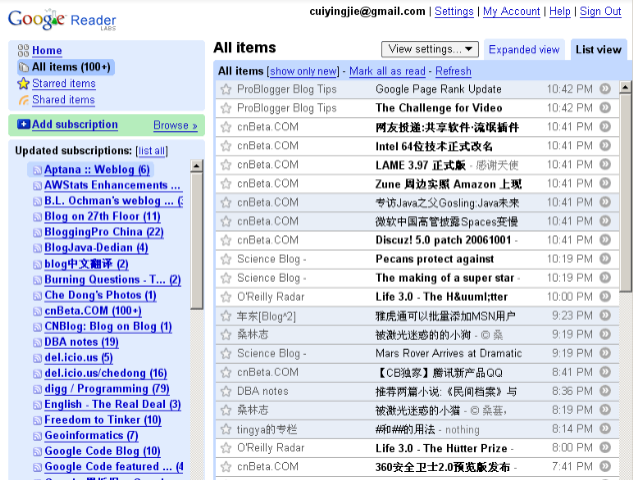
前一阵在朋友圈里做了个调查,居然很多人都不用RSS Reader,更少人用在线的Reader。其实用Google Reader来看朋友们的blog会方便很多,再也不用隔几天挨个去朋友们的blog查看更新了, 也不用担心会漏过blog上的精彩文章。 大家只要去 http://www.google.com/reader/ 用自己的gmail登陆即可, 然后找到别人的RSS Feed,在Google Reader里选择Add subscription即可。 以后只要每天看一眼Google Reader就能知道所有自己关注的blog有没有新的文章。
我的blog的RSS Feed是 http://www.doyj.com/feed/,欢迎大家订阅
按照 Zhang-Zi 的思路优化了一下, 确实速度有明显提升。可惜没什么量化指标,不知道哪里有量化网站访问速度的工具。 依主观感觉,合并js和css对载入速度提升的帮助最大。
作了近1个月的google adsense, 终于挣到了1.20美刀. Adsense的大牛们别笑,自己很知足了:D。

大家谁要感兴趣也去 google adsense 申请个帐号吧。 不过中文的 adsense 市场比英文要差很多(从我的站点看,中英文adsense要差10倍以上),大家要有心理准备。 要么就是写给老外看的英文blog, 王健硕的blog主要就是英文内容, 据说收入一个月在5000人民币左右。
下面是一些真正挣钱的blog
http://www.boingboing.net/ 年收入100万美元的blog
http://www.techcrunch.com/ 月收入6万美元的blog
http://www.huffingtonpost.com/ 获VC 500万美元的blog
安装了 Justin Blanton 开发的 smart archives 插件, 发现这个插件对中文和韩文支持不佳。我给做了点小修改,并且对他的一些小缺陷也进行了补正。最后的效果请看 http://www.doyj.com/archives/。
安装方法如下:
下面就是修改后的代码:
‘.$years[year].’: ‘);
$qm = mysql_query(“SELECT distinct month(post_date) as monthv
FROM $tableposts
ORDER BY monthv asc”) or die(mysql_error());
for ($i=1; $i<=12; $i++)
{
$q = mysql_query("SELECT *, year(post_date) as year
FROM $tableposts
WHERE year(post_date)='$years[year]'
AND month(post_date)='$i'
AND post_status='publish'
AND post_date <= NOW()
ORDER BY id desc") or die(mysql_error());
$sm = $month[zeroise($i,2)]; // get the shortened month name; strtotime() localizes
if(mysql_num_rows($q))
{ echo('‘.$sm.’ ‘); }
else
{ echo(‘‘.$sm.’ ‘); }
}
echo(‘
‘);
}
echo (‘
‘);
}
if (($format == ‘both’) || ($format == ‘list’)) { //check to see if we are supposed to display the list
$qy = mysql_query(“SELECT distinct year(post_date) as year, post_status
FROM $tableposts
WHERE post_status=’publish’
AND post_date <= NOW()
ORDER BY year desc");
// loop to display links to all posts, sorted by descending month and day
while($years = mysql_fetch_array($qy)) {
$qm = mysql_query("SELECT distinct month(post_date) as monthv FROM $tableposts ORDER BY monthv desc") or die(mysql_error());
while($date = mysql_fetch_array($qm)) {
$q = mysql_query("SELECT *, year(post_date) as year, month(post_date) as monthv
FROM $tableposts WHERE year(post_date)='$years[year]'
AND month(post_date)='$date[monthv]'
AND post_status='publish'
AND post_date <= NOW()
ORDER BY id desc") or die(mysql_error());
if(mysql_num_rows($q)) {
$lm = $month[zeroise($date[monthv],2)]; // get the full month name; strtotime() localizes
echo('
‘);
echo(‘
‘);
}
else echo(‘
‘);
}
}
echo (‘
‘);
}
}
}
}
}
?>

微软发布了Windows Live Writer 1.0 beta, 一个blog的离线书写工具. 不只是支持Live Space, 还支持其他blog系统,比如我现在用的Wordpress. 感兴趣的朋友可以从 cnbeta 下载。